



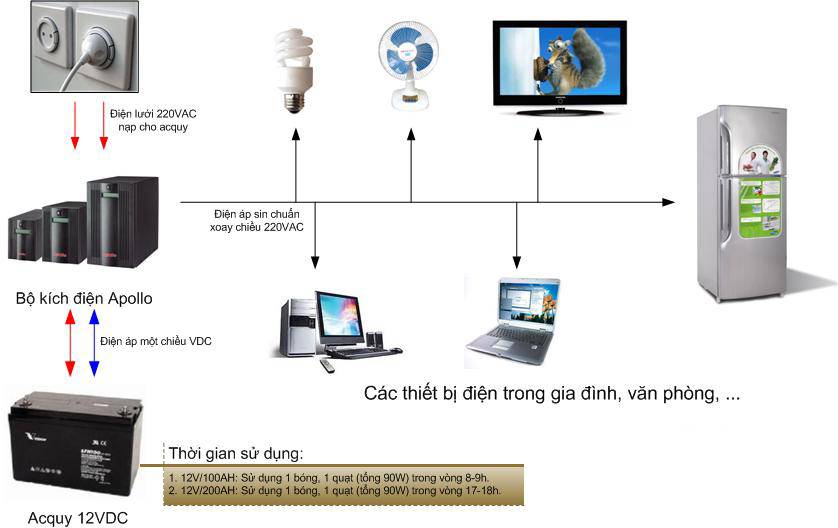


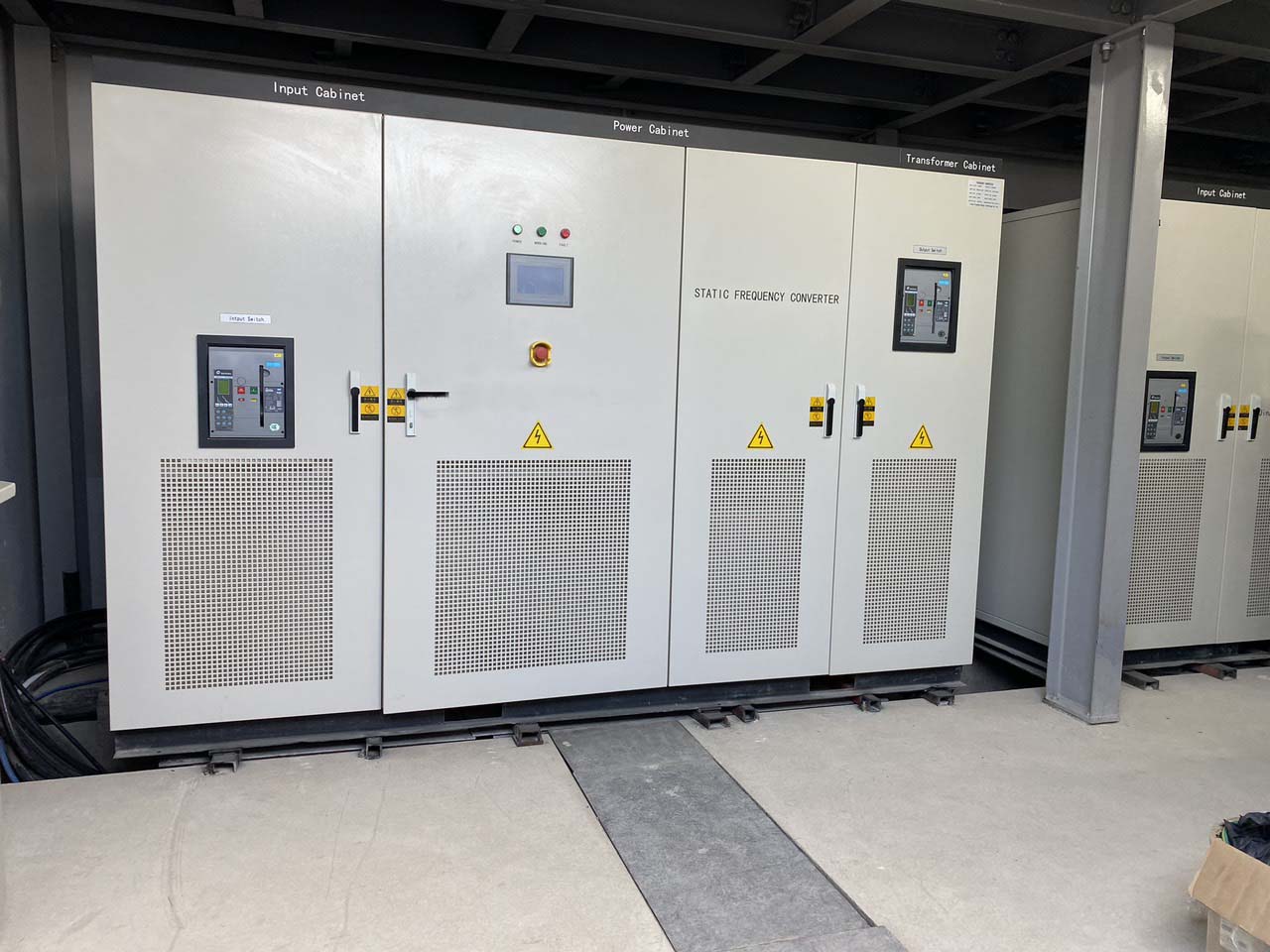
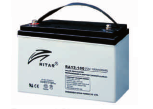
Battery capacity reflects the battery's ability to store electrical energy — the larger the capacity, the greater the storage capability. To supply power for a longer time, the battery capacity must be large enough, but the larger it is, the higher the cost, so the key concern is calculating the right capacity to match the investment budget. Although this calculation formula has been presented in previous articles or you may have come across it many times on the Internet, I will present it again here with a few additional notes on selecting the coefficient to help improve battery service life.
Parameters for the calculation include: Average power consumption (in W) over time (in hours). The formula is as follows:
Battery capacity (Ah) = [Usage time (hours) x Average power consumption (W)] / [Battery voltage (V) x 0.7]
According to the above formula, for example, to use a power inverter for 10 hours with an average power consumption of 200W using a 12V battery inverter, then:
Battery capacity = [10 (hours) x 200 (W)] : [12 (V) x 0.7], which is easily calculated to be 238 Ah.
If your inverter uses a 24V (or 48V) battery, the usage must be calculated according to the following formula:
Battery capacity = [10 (hours) x 200 (W)] : [24 (V) x 0.7], and the result is easily calculated to be 119 Ah.
So, is using a 24V inverter more advantageous than using a 12V battery (since the calculated results are different)? This is not the case, because energy cannot be created out of nothing - the energy level of two 100Ah batteries will always remain the same whether they are connected in parallel or in series. In the formula above, the 238Ah capacity result is calculated for a 12V battery, so they store 238 x 12 = 2856 Wh, while the 119Ah level is calculated for a 24V battery, so they store 119 x 24 = 2856 Wh - so they are the same, but to obtain a 24V voltage, two 12V batteries must be connected in series.
In the calculation formula above, we combine all loss coefficients (losses in the inverter, losses due to the battery's discharge capability...) to arrive at a coefficient of 0.7. This parameter depends on many factors, so it may trend upward (if the system has high efficiency) or downward. For safe use and to increase battery lifespan, this coefficient should be used on the lower side, for example calculated as 0.6 or 0.5. The reason is that using a coefficient of 0.7 is only accurate in the case where the battery is used until fully depleted, and using it this way usually causes the battery's lifespan to decrease quickly, leading to an earlier need to invest in a new system.
.PNG)
.PNG)
Tel/Fax: +84 24 7309 9997
Address (Office): No. 10 LK10, Ha Tri Service Land Area, Ha Cau Ward, Ha Dong District, Hanoi City
Website: www.lisatech.vn