


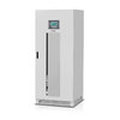
The first thing you think of is choosing a generator. But generators are too noisy, making it impossible to rest at night. Moreover, generators consume a lot of fuel, while fuel prices keep rising.
There is a solution to give your family peace of mind during power outages: using a SOJI inverter – reasonable cost, no need to spend money on fuel, smooth operation, and no noise.
During a power outage, especially in summer, you should only use the most essential devices such as: light bulbs, electric fans, or perhaps a TV. Beyond that, don't consider using a rice cooker, refrigerator, or air conditioner, simply because these devices have very high power consumption, requiring a high-capacity power inverter and multiple large-capacity batteries, which makes the cost very high. With many years of supplying power inverters in the market, we can tell you that about 90% of current inverter usage is to meet minimum needs during power outages, such as: lighting, fans, or a TV. For such needs, you can use the most reasonable budget for a power inverter. However, some households with a larger budget may choose a high-capacity power inverter to meet needs such as using a rice cooker, air conditioner, or refrigerator...
1. What does a power inverter consist of?
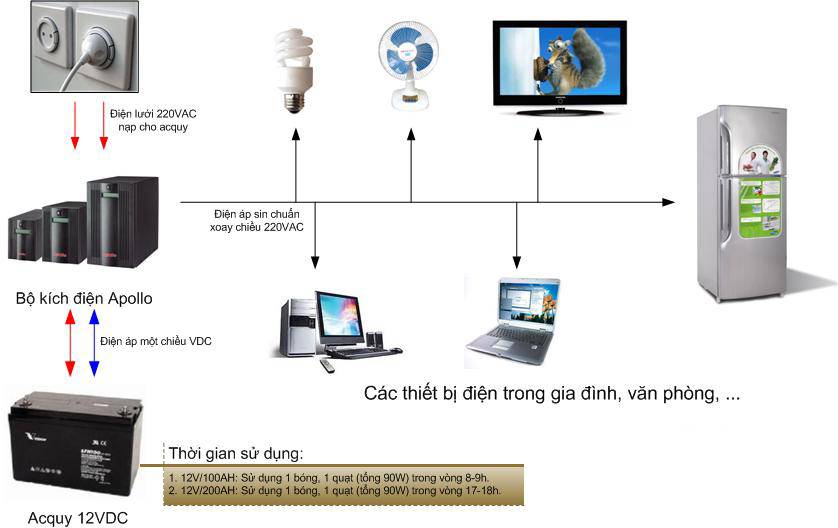
The power inverter consists of:
- Battery: For batteries, you can use either a dry (sealed) battery or a wet (flooded) battery. We recommend using a dry battery, as you can be assured that acid will not splash out and harm your health or damage appliances in your home. The battery used must be a 12V battery — the larger the battery capacity, the longer the power supply lasts (see more in the battery selection guide)
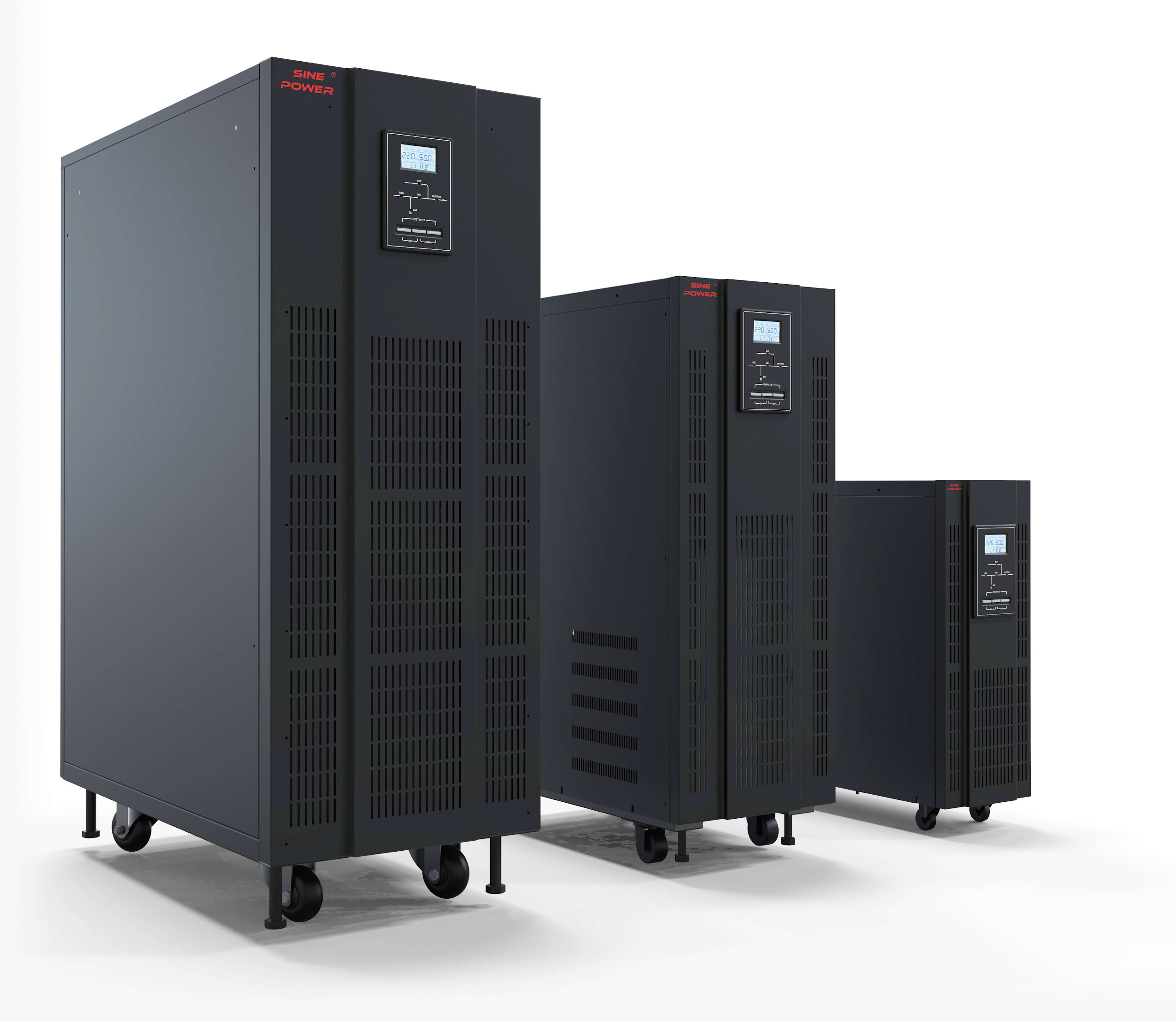
- Inverter: An inverter is a device that converts a battery's 12V direct current into 220V alternating current. There are many types of inverters on the market today: pure sine wave type, non-sine wave type, type with battery charging, type without battery charging... We recommend that you use the SOJI pure sine wave inverter with a built-in battery charger and automatic charging current adjustment, which helps increase battery life. Because the SOJI inverter is a smart inverter product with a standard sine output, its voltage stabilization safely protects the equipment in your home. If you buy a non-sine wave inverter, it will not be safe for the equipment in your home, such as: burnt fans, damage, or a reduced lifespan of your TV...
- For the essential equipment needs mentioned above, we recommend using a power inverter with a capacity of 1000VA and a battery of 100Ah to 200Ah as suitable.
2. Inverter usage time
Usage time depends on 2 factors:
- Battery capacity: Is the capacity written on the battery.
Example: A 12V-100Ah battery means the battery has a capacity of 100Ah and provides a power output of 12 x 100 = 1200W when fully charged, equivalent to 1.8 kWh.
- Power consumption: Is the total power of the devices you use in your household.
You can find the power rating of a device printed on its casing or by consulting the manufacturer. Some device power ratings for your reference:
There is a solution to give your family peace of mind during power outages: using a SOJI inverter – reasonable cost, no need to spend money on fuel, smooth operation, and no noise.
During a power outage, especially in summer, you should only use the most essential devices such as: light bulbs, electric fans, or perhaps a TV. Beyond that, don't consider using a rice cooker, refrigerator, or air conditioner, simply because these devices have very high power consumption, requiring a high-capacity power inverter and multiple large-capacity batteries, which makes the cost very high. With many years of supplying power inverters in the market, we can tell you that about 90% of current inverter usage is to meet minimum needs during power outages, such as: lighting, fans, or a TV. For such needs, you can use the most reasonable budget for a power inverter. However, some households with a larger budget may choose a high-capacity power inverter to meet needs such as using a rice cooker, air conditioner, or refrigerator...
1. What does a power inverter consist of?
The power inverter consists of:
- Battery: For batteries, you can use either a dry (sealed) battery or a wet (flooded) battery. We recommend using a dry battery, as you can be assured that acid will not splash out and harm your health or damage appliances in your home. The battery used must be a 12V battery — the larger the battery capacity, the longer the power supply lasts (see more in the battery selection guide)
- Inverter: An inverter is a device that converts a battery's 12V direct current into 220V alternating current. There are many types of inverters on the market today: pure sine wave type, non-sine wave type, type with battery charging, type without battery charging... We recommend that you use the SOJI pure sine wave inverter with a built-in battery charger and automatic charging current adjustment, which helps increase battery life. Because the SOJI inverter is a smart inverter product with a standard sine output, its voltage stabilization safely protects the equipment in your home. If you buy a non-sine wave inverter, it will not be safe for the equipment in your home, such as: burnt fans, damage, or a reduced lifespan of your TV...
- For the essential equipment needs mentioned above, we recommend using a power inverter with a capacity of 1000VA and a battery of 100Ah to 200Ah as suitable.
2. Inverter usage time
Usage time depends on 2 factors:
- Battery capacity: Is the capacity written on the battery.
Example: A 12V-100Ah battery means the battery has a capacity of 100Ah and provides a power output of 12 x 100 = 1200W when fully charged, equivalent to 1.8 kWh.
- Power consumption: Is the total power of the devices you use in your household.
You can find the power rating of a device printed on its casing or by consulting the manufacturer. Some device power ratings for your reference:
|
No.
|
Equipment type
|
Normal power
|
|
1
|
15" LCD monitor
|
35W
|
|
2
|
17” LCD monitor
|
40W
|
|
3
|
15” CRT monitor
|
110W
|
|
4
|
17” CRT monitor
|
130W
|
|
5
|
19” CRT monitor
|
170W
|
|
6
|
Desktop Computer CPU
|
180W
|
|
7
|
Ti vi LCD 32”
|
80W
|
|
8
|
Regular TV (CRT) 19”
|
200W
|
|
9
|
Laser printer
|
250W
|
|
10
|
Laptop
|
110W
|
|
11
|
Wall-mounted fan
|
55-65 W
|
|
12
|
Tube light 60cm - 120cm
|
20-40 W
|
|
13
|
Compact light bulb
|
15 W
|
|
14
|
2 HP Air Conditioner
|
1500W
|
|
15
|
1.5 HP Air Conditioner
|
1100W
|
|
16
|
1.0 HP Air Conditioner
|
750W
|
|
17
|
Refrigerator
|
from 100W - 500W
|
|
18
|
Network modem equipment
|
10W
|
|
19
|
Rice cooker
|
500-700 W
|
Example: With one SOJI H1500/900W pure sine wave inverter and one good 33Ah battery, you can run 1 TV, 3-4 lights, and 2-3 fans.
Usage time: If only a 15W energy-saving light and a 50W fan are connected, it will last 10-13h
3. Operating principle
- When grid power is available, the inverter will automatically charge the battery - with a smart microprocessor, the charging current is automatically adjusted by the device to suit each charging stage, thereby extending the battery's lifespan. When the battery is full, the device will automatically stop charging.
- When grid power is lost: The machine will automatically draw power from the battery and convert it to 220V to run the devices; this conversion process takes only 5ms, so the current is continuous (devices are not interrupted). When the battery runs out of power, the machine will signal with a beep sound or continuous flashing light to indicate that the devices should be turned off.
Note:
- There are many types of power inverters on the market. When buying a power inverter, besides the factors advised above, you should also pay attention to its charging current. Some power inverters currently on the market cannot charge large batteries of 150Ah or more because their charging current is too low. The charging current corresponds to 10 times the battery capacity. For example: an 8A charging current can only charge an 80Ah battery and cannot charge a larger one.
- Many power inverters on the market have a charging current of only 8-10Ah, so you should use a SOJI power inverter with a charging current from 10A to 35A, featuring a smart charging mode that automatically adjusts the charging current and a 4-stage charging process to help extend battery life.
- When grid power is available, the inverter will automatically charge the battery - with a smart microprocessor, the charging current is automatically adjusted by the device to suit each charging stage, thereby extending the battery's lifespan. When the battery is full, the device will automatically stop charging.
- When grid power is lost: The machine will automatically draw power from the battery and convert it to 220V to run the devices; this conversion process takes only 5ms, so the current is continuous (devices are not interrupted). When the battery runs out of power, the machine will signal with a beep sound or continuous flashing light to indicate that the devices should be turned off.
Note:
- There are many types of power inverters on the market. When buying a power inverter, besides the factors advised above, you should also pay attention to its charging current. Some power inverters currently on the market cannot charge large batteries of 150Ah or more because their charging current is too low. The charging current corresponds to 10 times the battery capacity. For example: an 8A charging current can only charge an 80Ah battery and cannot charge a larger one.
- Many power inverters on the market have a charging current of only 8-10Ah, so you should use a SOJI power inverter with a charging current from 10A to 35A, featuring a smart charging mode that automatically adjusts the charging current and a 4-stage charging process to help extend battery life.
LISATECH - OFFICIAL DISTRIBUTION REPRESENTATIVE IN VIETNAM.
Contact us for direct consultation and the best product and service pricing:
LISA CONTROL TECHNOLOGY CO., LTD
Tel/Fax: +84 24 7309 9997
Address (Office): No. 10 LK10, Ha Tri Service Land Area, Ha Cau Ward, Ha Dong District, Hanoi City
Website: www.lisatech.vn
LISA CONTROL TECHNOLOGY CO., LTD
Tel/Fax: +84 24 7309 9997
Address (Office): No. 10 LK10, Ha Tri Service Land Area, Ha Cau Ward, Ha Dong District, Hanoi City
Website: www.lisatech.vn