





1. Calculate the total power consumption of all devices that the solar system must supply.
Calculate the total Watt-hours used per day for each device. Adding them all together gives the total Watt-hours of the entire load used per day.
2. Calculate the number of Watt-hours the solar panels must supply for the total load each day.
Due to losses in the system, the number of watt-hours provided by the solar panel must be higher than the total watt-hours of the entire load.
Watt-hours of solar PV modules = 1.3 x total Watt-hours of the total load used
3. Calculating the size of solar panels needed
To calculate the size of the solar panels needed, we must calculate the required Watt-peak (Wp) of the solar panel. The amount of Wp generated by a solar panel depends on the climate of each region in the world. The same solar panel placed in one location will absorb a different amount of energy than when placed in another location. For accurate design, each region must be surveyed to derive a coefficient called the "panel generation factor," which can be roughly translated as the solar panel's power generation factor. This "panel generation factor" coefficient is the product of the collection efficiency and the solar radiation during the region's least sunny months, measured in units of (kWh/m2/day).
The solar energy absorption level in Vietnam is about 4.58 kWh/m2/day, so dividing the total Watt-hours of the solar panels by 4.58 gives the total Wp of the solar panels.
Each PV panel used has its own Wp rating; dividing the total required Wp by the Wp rating of the panel gives the number of solar panels needed.
The above result only tells us the minimum number of solar panels needed. The more solar panels there are, the better the system will work, and the longer the battery's lifespan will be. If there are too few solar panels, the system will lack power on cloudy days, draining the battery and thereby reducing its lifespan. If too many solar panels are designed into the system, it increases the system's cost, exceeding the allowed budget, which is sometimes unnecessary. How many solar panels to design also depends on the system's backup level. For example, a solar system with a 4-day backup level (called the autonomy day, meaning days without sunlight for the solar panels to generate electricity) requires an increased amount of battery, which in turn requires an increased number of solar panels. Then there is the question of which type of panel is optimal and suitable, since each geographic region has different weather. All of this requires the design to be carried out by experts with many years of experience designing solar systems for the region.
4. Calculating the inverter
For a stand-alone solar system, the inverter must be large enough to handle the case when all loads are turned on, meaning its capacity must equal 125% of the load capacity. If the load is a motor, additional capacity must be calculated to accommodate the motor's start-up time.
Choose an inverter whose rated input voltage matches the rated voltage of the battery. For grid-connected solar systems, a battery is not needed; the rated input voltage of the inverter must match the rated voltage of the solar panel system.
5. Calculating the battery
The battery used for solar systems is a deep-cycle type. This type allows discharge down to a very low level and fast full recharging. It can withstand a very high number of charge/discharge cycles without internal damage, making it durable with a long service life.
The number of batteries needed for a solar system is the number of batteries sufficient to supply power for the autonomy days when the solar panels cannot generate electricity. Battery capacity is calculated as follows:
- The efficiency of the battery is only about 85%, so dividing the Wh of the load consumption by 0.85 gives the Wh of the battery
- With a depth of discharge DOD (deep discharge level) of 0.6, we divide the battery's Wh by 0.6 to get the battery capacity


The above result tells us the minimum battery capacity for a solar system without backup. When the solar system has a number of backup days (autonomy days), we must multiply the battery capacity by the number of autonomy days to get the number of batteries needed for the system.

6. Designing the solar charge controller:
A solar charge controller has an input voltage matching the voltage of the solar panel and an output voltage corresponding to the voltage of the battery. Since there are many types of solar charge controllers, you need to choose the type that suits your solar system. For large solar panel systems, they are designed with multiple parallel strings, and each string is managed by a solar charge controller. The power rating of the solar charge controller must be large enough to receive energy from the PV and to charge the battery.
Usually, we select a Solar charge controller with Imax = 1.3 x the short-circuit current of the PV
Specific example:
Calculating a solar system for a remote household with the following usage requirements:
- 1 light bulb, 18 Watts, used for 6-10 hours in the evening.
- 1 electric fan, 60 Watts, used about 2 hours per day.
- 1 refrigerator, 75 Watts, running continuously
1. Determine the total electricity consumption per day = (18 W x 4 hours) + (60 W x 2 hours) + (75 W x 12 hours) = 1,092 Wh/day
(the refrigerator automatically shuts off when cold enough, so it can be considered as running 12 hours and resting 12 hours)
2. Calculating solar panels (PV panel)
PV panel = 1,092 x 1.3 = 1,419.6 Wh/day.
Total Wp of PV panel = 1,419.6 / 4.58 = 310Wp
If using a 110Wp PV panel, the number of PV panels needed is 310 / 110 # 3 panels
3. Calculating the inverter
Total power used = 18 + 60 + 75 = 153 W
Inverter power = 153 x 125% # 190W
Choose an inverter of 200W or higher
4. Battery Calculation

With 3 days of backup, battery capacity = 178 x 3 = 534 Ah
Thus, choose a 12V/600Ah deep-cycle battery for 3 days of backup.
5. Calculating the solar charge controller
Specifications of each PV module: Pm = 110 Wp, Vm = 16.7 Vdc, Im = 6.6 A, Voc = 20.7 A, Isc = 7.5 A
Thus, the solar charge controller = (3 PV panels x 7.5 A) x 1.3 = 29.25 A
Choose a solar charge controller with a current of 30A/12V or higher.
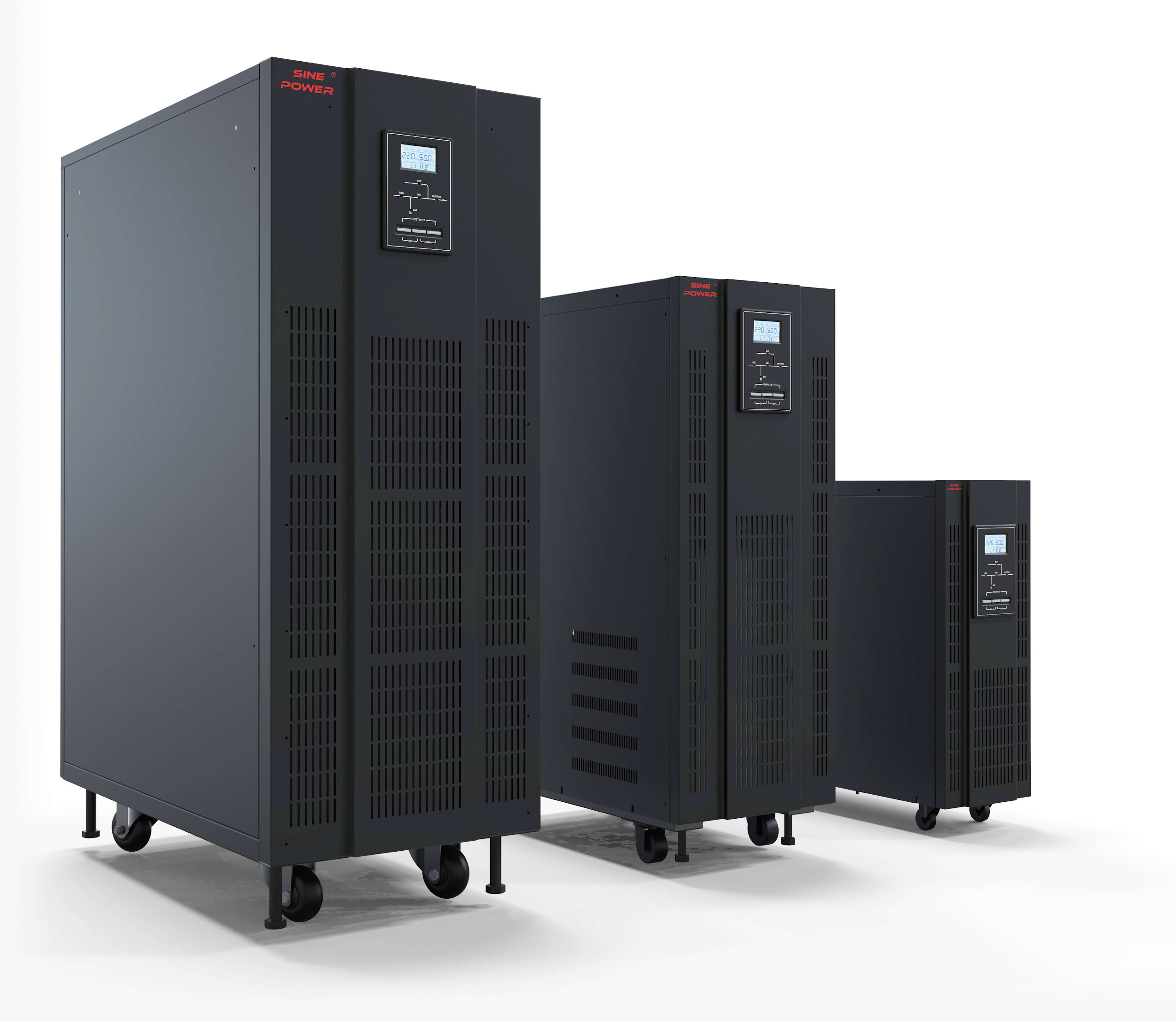
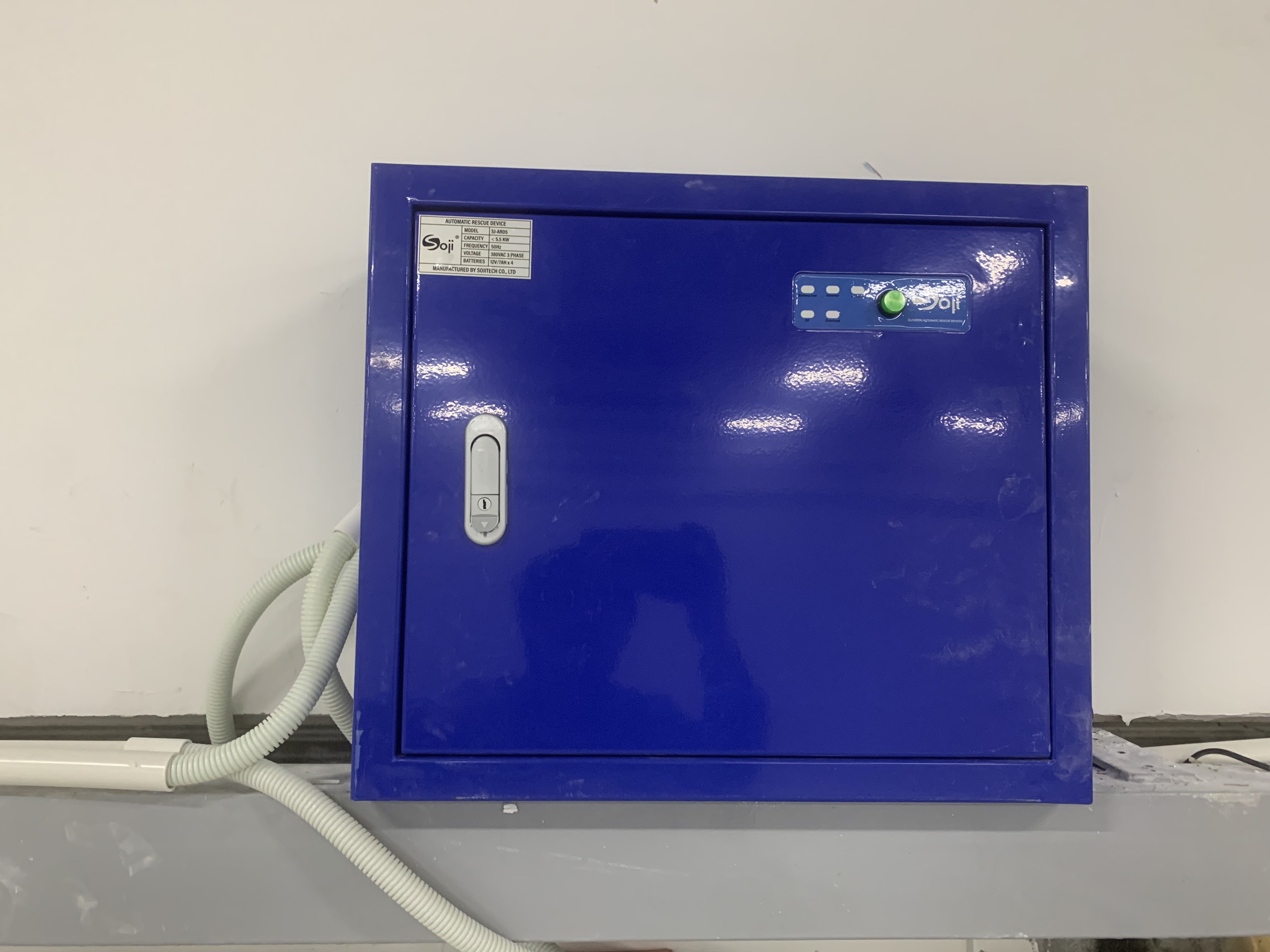
LISATECH provides products ELEVATOR CONTROL SYSTEM , ELEVATOR RESCUE DEVICE (ARD), ELEVATOR FREQUENCY CONVERTER, ELEVATOR AIR CONDITIONER, POWER EQUIPMENT, FREQUENCY CONVERTER,......genuine products of LISA SCHNEIDER, YASKAWA, SOJI, RIELLOW...! Lowest price, best quality!
Contact us for direct consultation and the best product and service pricing:
LISA CONTROL TECHNOLOGY CO., LTD
Tel/Fax: +84 24 7309 9997
Address (Office): No. 10 LK10, Ha Tri Service Land Area, Ha Cau Ward, Ha Dong District, Hanoi City
Website: www.lisatech.vn