


Product Categories
- Product
- High-end Karaoke & Entertainment Solutions for home and business
Product Price
Online Support
Support 1
Hotline: 0973 999 999

Support 2
Hotline: 0973 999 999
Support 3
Hotline: 0973 999 999
Support 4
Hotline: 0973 999 999
Support 5
Hotline: 0973 999 999
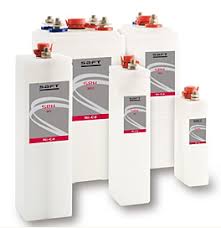
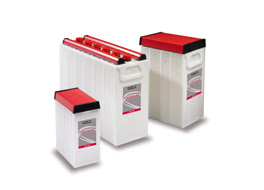
Nickel Cadium battery
LEARN ABOUT ALKALINE BATTERIES
Alkaline batteries come in many types such as: Ni-Fe; Ni-Cd, Ag-Zn... . Here, we only mention the type of battery that is widely used in our country. That is the Ni-Cd type.
The electrochemical system of this battery type is as follows: (+) NiOOH │ KOH │ Cd (-)
Overall reaction:
Cd + 2 NiOOH + 2H2O ↔ 2 Ni(OH)2 + Cd(OH)2
Electrode charge-discharge process:
Ni(OH)2 +OH- ↔ NiOOH + H2O + e
Cd + 2OH- ↔ Cd (OH)2 + e
φ(+) = φo NiOOH/Ni(OH)2 - 0,059 lg [OH-]
φ(-) = φoCd(OH)2/Cd - 0,059 lg [OH-]
It is clear that: φ+ and φ- depend mainly on the quality of the electrode, the activity of OH- ions, and the mobility of H2O. However, φ does not depend on the activity of OH- ions because φ = (φ+) – (φ-)
There have been many research studies on the electrode process, electrolyte, and the effects of toxins and additives on the quality of this battery. To ensure the battery operates in a uniformly distributed state, a small amount of additive is used in the electrolyte, with LiOH being the additive selected. However, during operation, an electrochemically inert compound, LiNiO2, is formed, which has a negative effect on the electrode process, leading to a reduction and loss of capacity (especially under high-temperature conditions).
In addition to their adverse effects, substances that severely poison the electrode and electrolyte process also include: Mg, Si, Ca, Tl, Fe(OH)3, K2CO3
Where:
Mg, Si, Fe(OH)3 greatly affect the Ni positive electrode.
Ta and Ca have a significant effect on the Cd negative electrode.
K2CO3 negatively affects the quality of the electrolyte.
The above effects lead to a decrease in battery capacity, and can even cause the battery to lose capacity entirely. To ensure that alkaline batteries operate as required, the minimum allowable toxin content has been researched. At the same time, specific regulations have been set for the quality of the alkaline electrolyte, including the water standard used for mixing chemicals, the purity of KOH, as well as strict battery maintenance procedures.
ACQUY Ni-MH
Nickel-metal hydride battery, abbreviated NI-MH, is a type of rechargeable battery similar to nickel-cadmium battery (Ni-Cd) but uses a hydrogen-absorbing alloy for the negative electrode instead of cadmium (which is a toxic substance), so it causes much less environmental pollution. A Ni-MH battery can have a capacity two to three times greater than a Ni-Cd battery of the same size, and its memory effect is also smaller. Applications of Ni-MH batteries include hybrid vehicles, electronic devices, telecommunications, and power systems. Ni-MH technology is also used for low-floor trams as well as for robots.
Charge
When fast charging, Ni-MH batteries should be charged with a smart charger to avoid overcharging, which can damage the battery and create hazardous conditions. Modern Ni-MH batteries today contain catalysts that immediately eliminate the gas generated during overcharging so the battery is not damaged (2 H2 + O2 = 2 H2O). However, this only works when the current reaches up to C/10 h. Because of this reaction, the battery heats up significantly, marking the end of the charging process. Some fast chargers have a fan to keep the battery cool.
Some equipment manufacturers claim that Ni-MH batteries can be safely and simply charged with low-current chargers, with or without a timer, and that regular overcharging may also be permissible at currents up to about C/10h. In practice, this approach is applied to cordless telephones and low-cost battery chargers. While it may be safe, it is not good for battery lifespan.
Discharge
Caution should be exercised when discharging batteries to ensure that one or more batteries in a connected system are not fully discharged and end up in a reverse polarity condition. Batteries are never exactly identical, so it is inevitable that one cell will become fully discharged before the others. When this happens, the "good" batteries will start to reverse-charge the depleted cell, which can cause that battery to be completely damaged. When you notice dimming lights or the device slowing down, you should immediately turn off the device to avoid reverse polarity. For devices that use only a single battery, reverse polarity will not occur, because there is no other battery to charge it in reverse once it is depleted.
Chemical reaction:
The anode reaction occurring in a Ni-MH battery is as follows:
2H2O + 2e- = 2OH- + H2
MH + H2 = Mm-Hx
The battery is charged according to the right side of this equation and discharged according to the left side. Mm denotes mischmetal. Hydrogen generated during charging is stored in the form of Mm-Hx, the metal hydride of the battery. It is not produced in gas form. Nickel (II) hydroxide forms the cathode.
The "metal" in a Ni-MH battery is actually an intermetallic mixture. Many different compounds have been researched for this application, but the commonly used ones today fall into two categories. The most common compound is AB5, where A is a mixture of rare earth elements and Titanium; B is Nickel, Cobalt, Manganese, and Aluminum. High-capacity "multi-component" electrodes are based on AB2 mixtures, where A is Titanium and Vanadium; B is Zirconium or Nickel, supplemented with Chromium, Cobalt, and Manganese.
All these mixtures play the same role and can form a mixture of metal hydride compounds. When hydrogen ions are separated from the potassium hydroxide electrolyte solution by the voltage generated during charging, this process prevents them from generating gas, allowing volume and pressure to remain low. When the battery discharges, the same ions are released to participate in the reverse process.
Ni-MH batteries corrode less, so if left in a flashlight for more than a year, they corrode less than alkaline batteries.